Blog4 October 2026
The four Cs: how a diamond is judged
Cut, colour, clarity and carat weight are the four measures every diamond is graded on. Here is what each one means, and what to look for when a stone is in front of you.
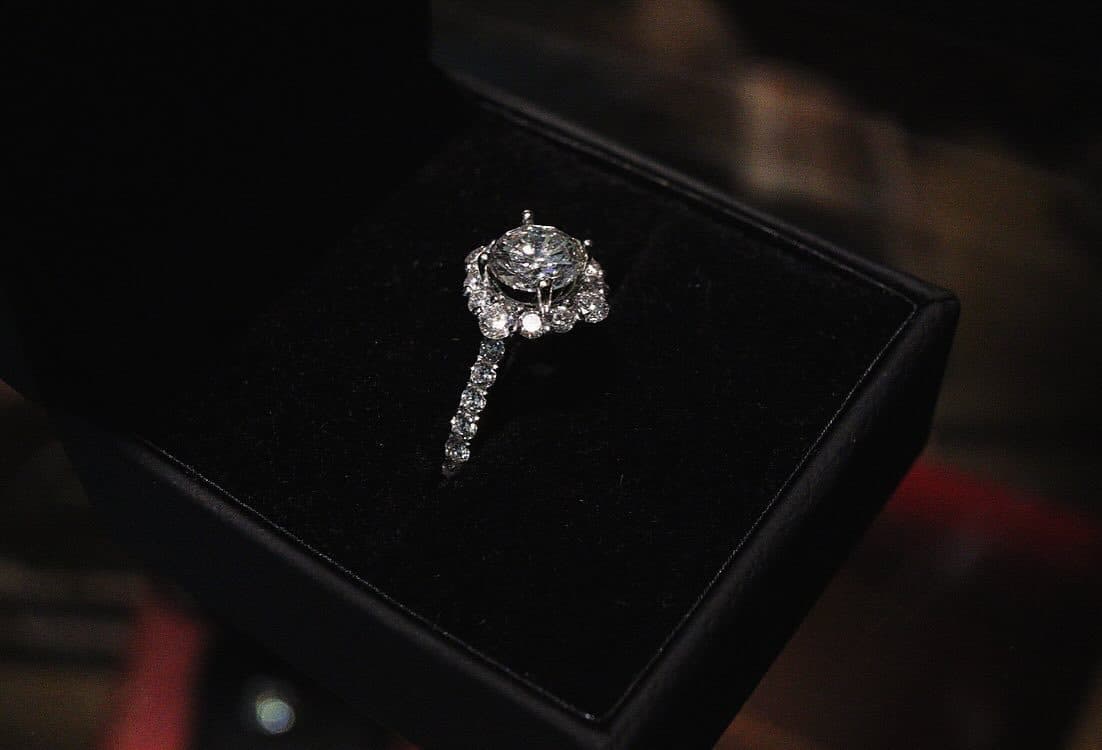
Two diamonds can weigh the same, look much the same at first glance, and still be very different stones. The difference lies in four things, known in the trade as the four Cs: cut, colour, clarity and carat weight. The Gemological Institute of America (GIA) set them out as a grading system in the middle of the last century, and jewellers and laboratories around the world now describe diamonds in the same terms.
None of the four tells you everything on its own. Together they describe a stone well enough that two people who have never met can agree on what it is.
Cut
Cut is the one most often confused with shape. Round, oval, pear and emerald are shapes. Cut is how well the stone has been proportioned and finished: the angles of its facets, its symmetry and its polish.
It matters because cut decides what a diamond does with light. A well cut stone returns light through the top as brightness, breaks it into flashes of colour, and sparkles as it moves. A stone cut too deep or too shallow lets light leak out through the sides and the bottom, and looks dull however good its other grades are.
For round brilliant diamonds, the GIA grades cut on five steps:
- Excellent
- Very Good
- Good
- Fair
- Poor
Colour
For white diamonds, colour grading measures how little colour a stone has. The GIA scale runs from D, which is colourless, to Z, which has a light yellow or brown tint.
- D to F: colourless
- G to J: near colourless
- K to M: faint colour
- N to R: very light colour
- S to Z: light colour
The steps are small. Neighbouring grades are hard to tell apart unless the stones are loose and side by side under controlled light, which is how a laboratory grades them. Once a diamond is set in a ring, the metal around it changes how its colour reads as well.
Diamonds with a strong colour of their own, such as yellow, pink or blue, are called fancy coloured diamonds and are graded on a separate scale.
Clarity
Almost every diamond carries small marks from the way it formed. Those inside the stone are called inclusions and those on its surface are called blemishes. Clarity grading describes how many there are, how large they are and where they sit, as seen by a trained grader under ten times magnification.
The GIA scale has eleven grades in six groups:
- Flawless (FL)
- Internally Flawless (IF)
- Very, Very Slightly Included (VVS1 and VVS2)
- Very Slightly Included (VS1 and VS2)
- Slightly Included (SI1 and SI2)
- Included (I1, I2 and I3)
Many of the inclusions that set a grade cannot be seen without a loupe. A stone with nothing visible to the naked eye is often described as eye-clean.
Carat is a measure of weight, not of size.
Carat weight
A carat is a unit of weight equal to 200 milligrams, a fifth of a gram. Each carat is divided into 100 points, so a diamond of 50 points weighs half a carat.
Because carat is weight, two diamonds of the same carat weight can look different in size. A deeply cut stone carries more of its weight below the setting, where it cannot be seen, and looks smaller from above than a well proportioned stone of the same weight.
Larger diamonds are rarer than small ones, so price does not rise in a straight line with weight. A single stone of one carat is generally worth more than two half-carat stones of the same quality.
Reading a grading report
An independent laboratory records all four grades in a grading report, sometimes called a certificate, together with the stone's measurements. Each report has a number, and laboratories often inscribe that number on the edge of the diamond itself with a laser, too small to see without magnification.
A report describes a stone. It does not put a price on it. What it does is let you compare one diamond with another on equal terms, and it is worth keeping safe with the piece.
Which matters most
There is no single answer, which is why all four are recorded. Many buyers put cut first, because it has the most effect on how lively a stone looks. After that it is a balance between colour, clarity and weight, and the right balance depends on the piece and on what you want from it.
The surest way to understand the four Cs is to look at diamonds rather than charts. If you would like to do that with someone who handles them every day, plan a visit to either shop, or see what is in the catalogue today.